Pro Tools

Pro Tools Course | Seattle

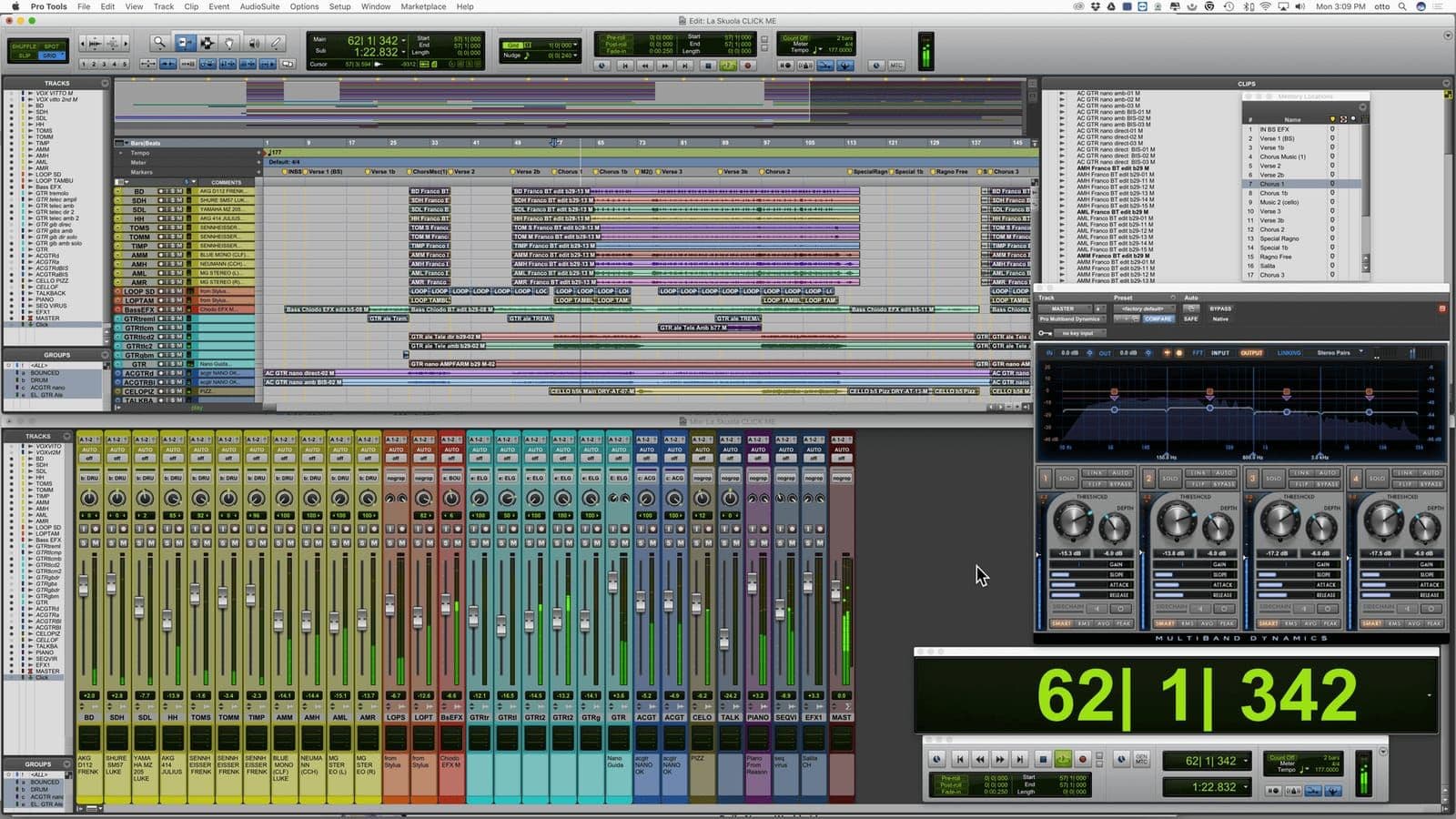
This course is designed to help you get to grips with the basic principles and fundamental skills needed to create and arrange music in Pro Tools 12. You’ll learn how to set up sessions and follow this right through to the final mix-down, all the while using Pro Tools 12’s latest features. This will include MIDI recording and editing techniques, mixing, recording and editing digital audio and how to use ‘plug-ins’ (processing effects). Course participants will get the chance to apply what they’ve learned in class to recording projects under the supervision of an instructor. It’s a course that will be of interest to audio engineers and producers, songwriters and composers as all are walked through the creative and practical processes of seeing a song through from conception to completion, delivery and back up!

Our certified trainers are brilliant at step-by-step instruction, using music projects to illustrate their explanations, beginning by teaching basic music creation skills and then progressing through to more advanced production techniques. To learn more and request information on the schedule, click here.

THE LEARNING OBJECTIVES

After successfully completing the Pro Tools course, students will be able to:

  • Create, set up and successfully configure Pro Tools session/Project
  • Set up and capture/record both audio & MIDI information
  • Successfully perform basic editing, including selecting and navigating around the relevant windows
  • Import audio &video into sessions
  • Perform basic mixing and apply routing concepts to sessions
  • Diligently deliver and perform backup of work

36 Hours | In-Person: $1299 | 33% off for Online Remote Attendance

Enter your schedule preferences by clicking below and we will match you up with the perfect class!

Testimonials

Sharing and learning from a legendary Producer/Engineer is priceless and incredible.

Pablo Toscano

The course is very friendly and engaging. Any and all questions will be asked with no hesitation or frustration, and it helps everyone else in the class that might have the same question in mind.

Ryan Conway

Affordable classes with a lot of knowledgeable teachers that are down to earth and easy going... amazing teachers.

Anthony C

The instructor was great. He was extremely good at explaining things and always gave us enough time to put what we were learning into practice. Most importantly, he is passionate about music and actually enjoys teaching which really makes the whole experience very enjoyable.

Reggie Chelsom

It’s a great school and have great teachers. Some schools care only about fancy gear in the classroom and forget about the essential: the teachers!

João Gama

From the Blog

  • 360-Degree Video Footage Of A Class

    Samsung asked us if we'd like to borrow one of their prototype 360-degree cameras. We said yes and it didn't take us long to decide what to do with it! It's sphere-shaped device with a front and back lens.

  • 4 Core Principles of Music Production for Beginners

    Music is a powerful medium of communication. As Shakespeare himself asserted “When words fail, music speaks”. Technically speaking, the music or the songs that we hear comprise of two basic parts: the instruments (guitar, violin, piano, drums etc) and the vocals which are collectively known as ‘Trac

  • 5 Mixing Mistakes to Avoid

    by Katie Gilchrest When it comes to mixing, establishing a balance is one of the most important parts of creating a professional sounding production. Some of the same miscalculations are made again and again, and fortunately there are ways to recognize, avoid and fix them. Here are five common mixin

  • Audio Interfaces

    Audio Interfaces An audio interface is a piece of hardware that connects musical instruments, microphones, and other sound sources to a computer. The audio interface acts as a bridge between the analog audio signals from the instruments and the digital signals that the computer can understand and pr

  • Creative Uses for Melodyne

    Celemony's Melodyne is a highly sophisticated pitch analysis and correction software suite known mainly for its use in tuning vocals. As effective as it is in this capacity, Melodyne's capabilities allow for a range of other creative uses outside of simply correcting mistakes in performance. In this

  • DIY Home Recording Studio Tips

    As early as 2010, if you wanted to put together an album you were pretty much forced to shell out cash to a local recording studio. Or, even worse, you pretty much needed a record deal with a label of some sort.

  • Drum Miking Techniques

    Drum Miking Techniques: Recorder Man and Glyn Johns Katie Gilchrest's take on drum miking techniques Many considered the drum set one of the hardest pieces of equipment to mic in a studio. A drum kit is not one instrument, but a collection of multiple instruments, featuring a wide variety of differe

  • How To Improve Bass In Music

    How To Improve Bass In Music Bass can be a very complicated part of your mix. Actually, we’d even go and say that the majority of home-producers or home-recorded work, don’t have a good low-end, which is really the basis (get it, bass-is?) for any mix. In this article, we look at how to improve bass

  • How to Compress Drums

    The sound of modern drums in rock, pop, and electronic music very rarely embodies the natural range that acoustic drums are capable of. This is most often due to the application of compression, adding punchiness, energy and consistency to a drum track.

  • How to EQ Vocals

    How to EQ Vocals Katie Gilchrest's guidelines on how to EQ vocals. For most styles of music, vocals are one of the most important parts of the mix. Poorly EQd vocals can cause detriment and distraction to an otherwise great song. Equalization using a parametric EQ is a tool that can allow vocals to